
When I first started thinking about getting into this blog thing, my first thoughts were to share some insights of my daily work. I wanted to share some of my experiences while optimizing Power BI solutions.
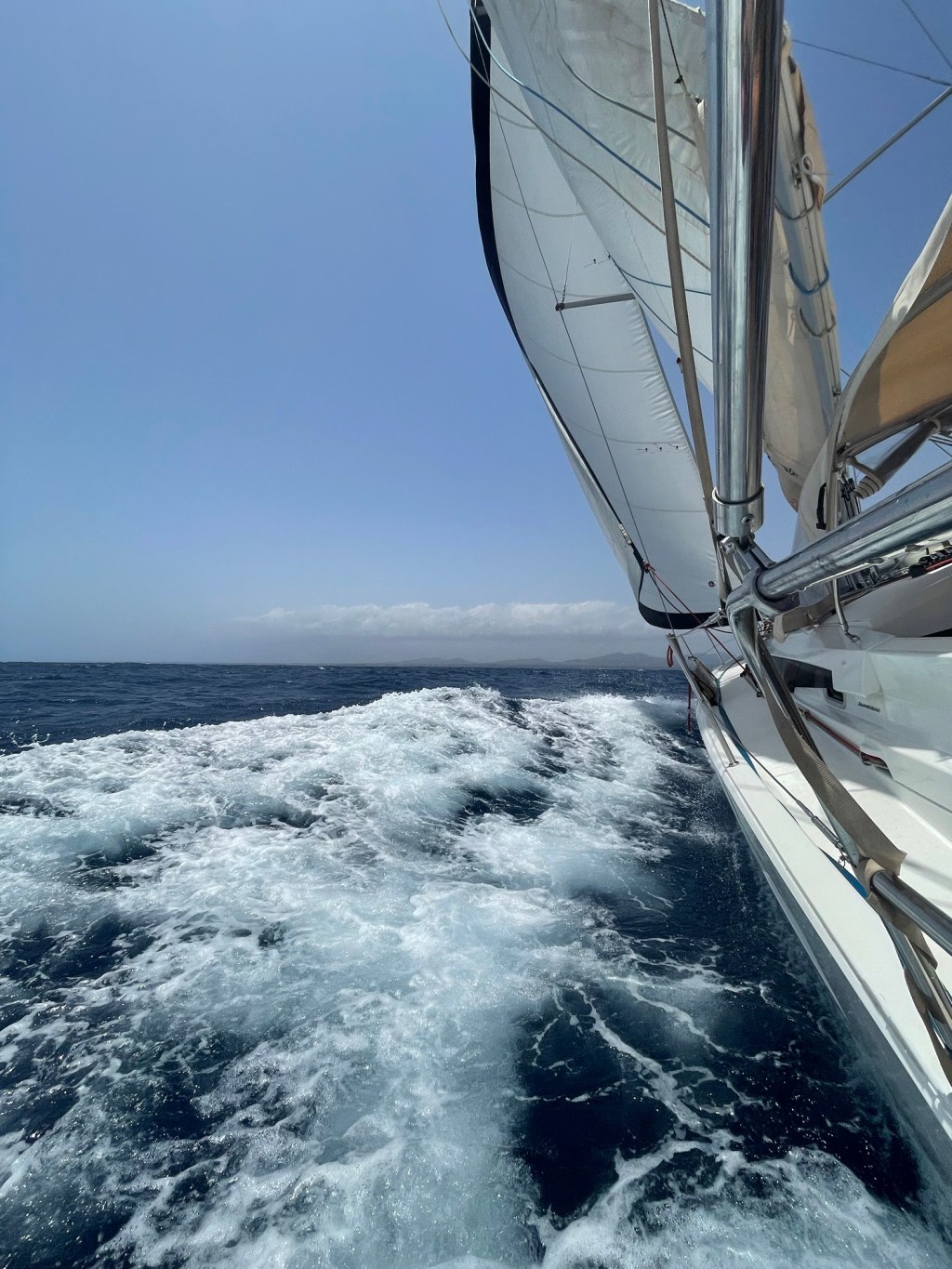
So when I thought about my intrinsic motivation and why I wanted to do this, I quickly came up with my secret passion for efficient, sustainable and optimized operations. Those of you who know me a bit better know that I am a passionate sailor and skipper for many years. I love to find some analogies to sailing whenever I think about work.
To me it is highly satisfying to set sails and trim them as good as possible. That means having the sails set in the best possible way to take most advantage of the wind pushing me forward.
How do we convert this thinking process into tuning Power BI solutions? Well, pretty simple: You can only get the highest speed with a reliable and long lasting operation when you turn around from time to time and try to optimize every single bit of your model and report solution. Saying that, you can have the fanciest report UI design, but if the model behind it is poorly designed, it cannot perform well. Same with a pretty and brand new racing yacht: Having the yacht alone doesn’t make it fly – knowing how to handle her gives the boost!
However, I don’t dare saying I am the best in handling these high performance analytical platforms. No way! If anyone would say that, I couldn’t believe it. So, all I am trying to do is to learn, adapt, adjust, fail and advance. Like probably every one of us does. Advancing analytical platforms like Power BI is not something you can just learn and adapt directly. In my opinion, it is a life-long learning process.
So let’s come back to the relation to our oceans. In order to operate Power BI solutions in a sustainable way, we need to find a way of reducing unnecessary data loads and resource consumption. A simple example: Copying the history of hundreds of millions of details on sales orders to our Power BI Semantic Model over and over again, is not really sustainable. Despite the fact that the order history isn’t changing at all, why should we truncate and load the data over and over again? There are other solutions that can be applied and our oceans will highly appreciate it. Less compute power is needed, leading to reduced operations on the server, reducing the consumption of electricity needed, lowering the need of more powerful servers, producing less environmental pollution and somewhere finally leading to cleaner oceans due to less resource consumption.
I know that this is very far-fetched and of course, improving one import strategy to Power BI Semantic Models does not solve the climate crisis and rescues our oceans, but changing the way of developing to be more sustainable might have a bigger impact. And that is what I am trying to achieve. Providing performant, efficient and sustainable BI solutions. From a data strategy point of view, but also from user experience who do not need to wait for a long time to see the desired insights.
Now I’m curious, what are you currently working on to make your Power BI solutions or those of your customers more sustainable and efficient?


 Ocean BI
Leave a comment